



By: Abdullahi Inu
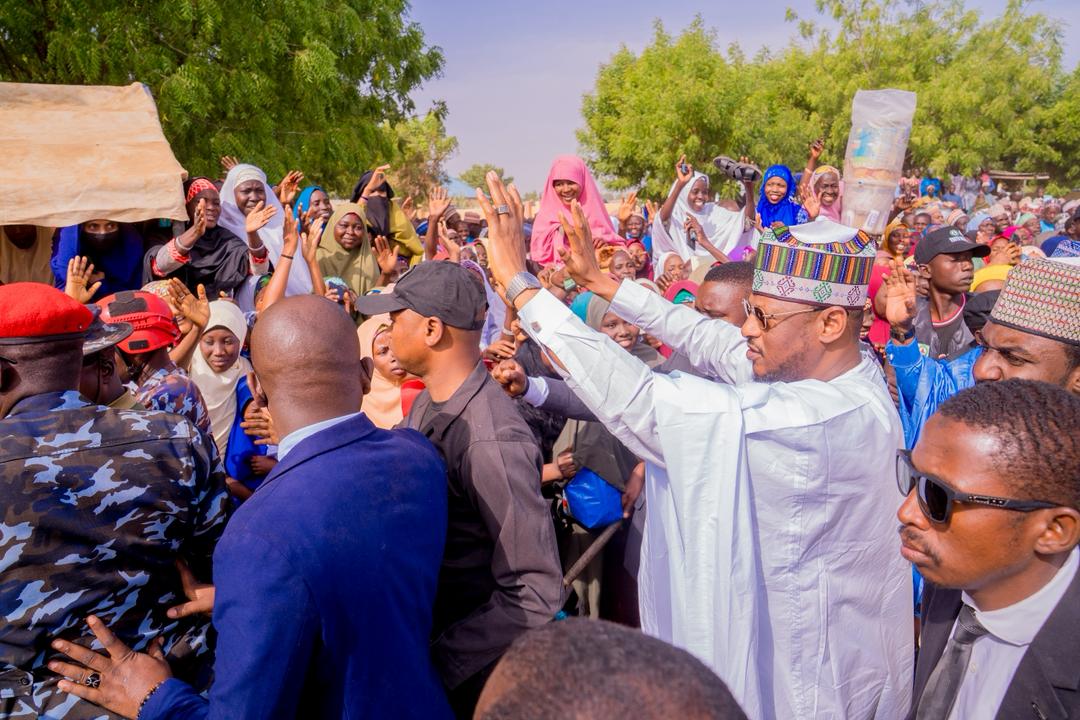
Governor Dikko Umaru Radda’s recent completion of a comprehensive tour across all 34 local government areas of Katsina State stands as a landmark governance exercise that has left a measurable imprint on communities, institutions, and citizens’ perception of leadership. What began as a routine assessment tour gradually evolved into one of the most impactful engagements of his administration — a mission that reconnected government with the grassroots, revived dormant projects, and reinforced the principles of inclusiveness and accountability.


For many residents, the tour was far more than ceremonial visits. It represented a rare opportunity to have the state’s chief executive walk through their streets, sit in their community halls, and observe firsthand the challenges they confront daily. From Funtua to Daura, Kurfi to Zango, and from the bustling township of Katsina to the most remote and rural communities, Governor Radda’s message was consistent: development must be practical, timely, and people-centred.
A defining feature of the 34-LGA tour was the Governor’s deliberate choice to listen before directing. Community leaders, traditional institutions, youth groups, farmers, traders, religious organisations, and women associations all had the chance to speak candidly about their concerns and expectations. In many LGAs, the Governor held open public dialogues where residents highlighted issues ranging from poor road networks and insufficient healthcare facilities to insecurity, water scarcity, education gaps, and economic hardship.
This listening approach, analysts say, allowed the administration to gather unfiltered information that does not always reach the state capital through conventional reporting channels. It also reassured citizens that their voices matter — a sentiment that many described as “renewing their faith” in participatory governance.
Perhaps one of the clearest impacts of the tour was the revival of several abandoned or slow-moving projects scattered across the state. At multiple stops, Governor Radda visibly expressed displeasure at contractors who had failed to meet timelines, issuing on-the-spot instructions for immediate action.
Roads previously left in deplorable condition received new completion deadlines. School renovations that had stagnated were reactivated. Rural water schemes, some of which had not functioned for years, were ordered to be restored with updated technical support. Health centres lacking staff or equipment were earmarked for urgent intervention, while local economy-driven projects — such as markets and skill centres — received renewed government attention.
The tour also witnessed the commissioning of several completed projects, reinforcing the administration’s focus on practical, measurable achievements rather than promises. In Katsina LGA, for example, the Governor wrapped up the tour by unveiling a series of infrastructural improvements, marking the symbolic end of a transformative statewide inspection.
Given the insecurity challenges affecting parts of Katsina, the Governor dedicated a major portion of the tour to strengthening community-based security networks. Meetings were held with vigilante groups, local intelligence units, and security agencies to reassess the evolving threats posed by banditry.
Governor Radda emphasized cooperation, early reporting, and intelligence sharing. In some LGAs, he approved additional support for community vigilante groups and directed intensified collaboration between the state-backed Community Watch Corps and conventional security agencies. His engagement reassured many residents who had repeatedly called for government presence in their security realities.
One of the most profound outcomes of the tour was the restoration of trust between citizens and government — a relationship that is often weakened by distance and bureaucracy. Residents across the 34 LGAs expressed appreciation for the Governor’s willingness to step into their environments and witness their struggles without filters.
In many communities, elders noted that no governor in recent years had embarked on such a thorough and consistent grassroots outreach. Youths, too, praised the initiative, especially its emphasis on inclusion and the promise of future empowerment programs tailored to local needs.
Women groups highlighted his attention to social welfare concerns, particularly issues affecting mothers, children, and rural households. The Governor assured them that his administration’s social protection agenda, including education support, health coverage, and livelihood programmes, would be expanded based on the findings of the tour.
Governance analysts have described Radda’s 34-LGA tour as setting a new standard for leadership accountability in Katsina State. Instead of relying solely on reports from ministries or agencies, the Governor insisted on verifying progress himself — a practice many believe will improve service delivery and discourage negligence.
The tour also reinforced transparency. By engaging with communities directly, Radda clarified his priorities and allowed citizens to measure government performance against the true needs of each locality.
With the extensive tour now concluded, expectations across Katsina are high. The Governor has pledged that the insights gathered will be translated into targeted policies and strategic reforms. Already, several ministries and agencies are adjusting their work plans in line with field observations.
Residents hope the tour marks the beginning of a more responsive and people-driven government — one that engages regularly with the grassroots and ensures that development reaches every corner of the state.
For now, one thing is certain: Governor Radda’s 34-LGA tour has left a lasting impact. It has reenergized communities, strengthened the bond between government and the governed, and set Katsina State on a more inclusive and accountable path to development.
Abdullahi Inuwa Social Commentator ainuwa303@gmail.com
About The Author
