



By: Babagana Bukar Wakil, Maiduguri
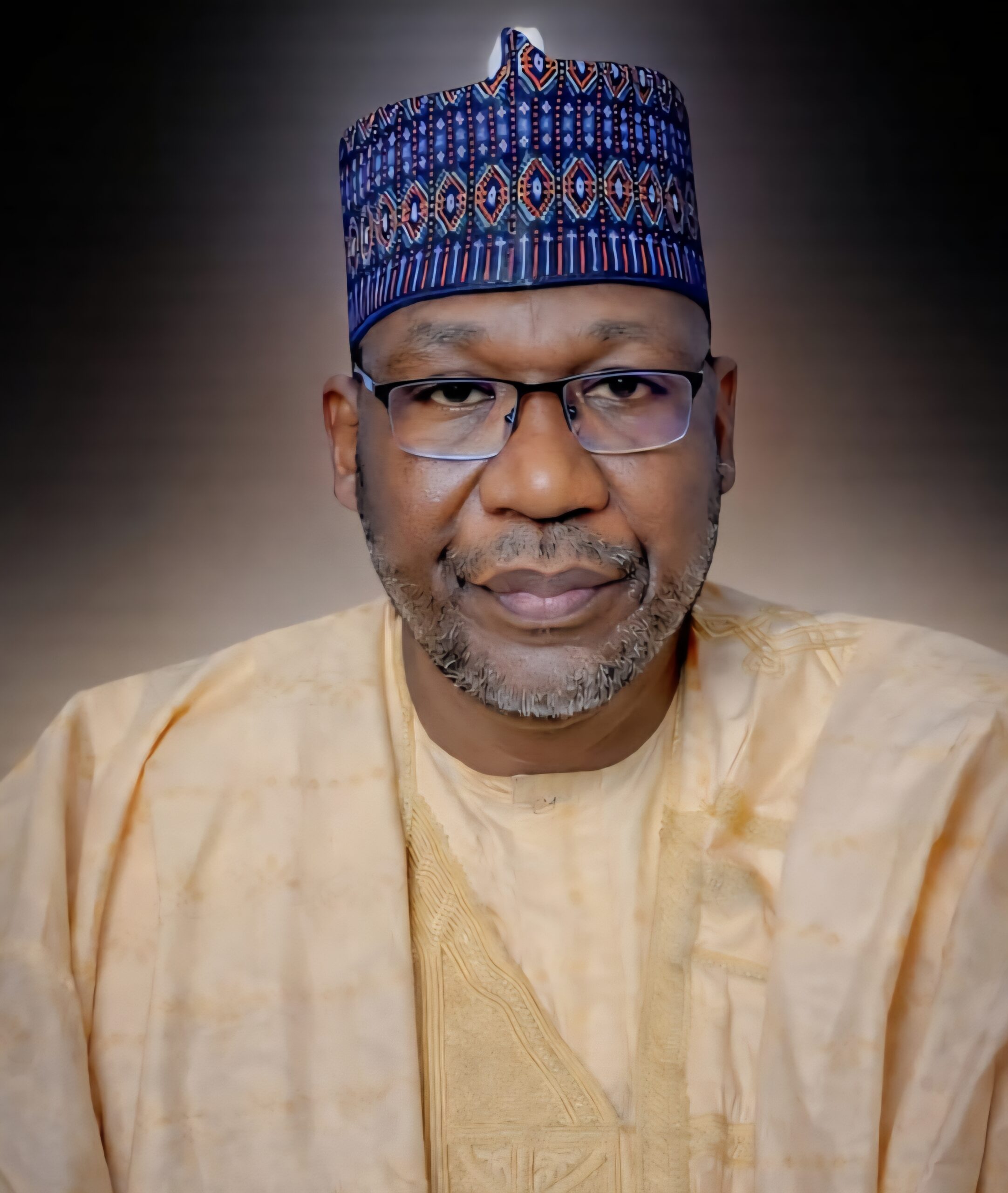
The Honourable Commissioner for Information and Internal Security in Borno State, Professor Usman Alh Tar, has formally handed over the affairs of the ministry after nearly three years in office, following the dissolution of the Borno State Executive Council by Governor Prof Babagana Umara Zulum.


According to official records and stakeholder testimonies, Prof Usman Alh Tar orchestrated wide ranging institutional recalibrations and strategic operational gains across both the state’s public communication apparatus and its internal security architecture, this reporter can confirm.
The low key yet symbolically significant ceremony, convened within the Ministerial Conference Room, Musa Usman Secretariat, Maiduguri, drew the attendance of the Permanent Secretary, most senior directors , heads of parastatals operating under the ministry’s purview, policy advisers to Governor Babagana Umara Zulum, and a cross section of senior career staff.
In his valedictory address, a discourse marked by analytical retrospection and administrative candour, the Honourable Commissioner for Information and Internal Security, Professor Usman Tar, characterized his tenure as a privileged exercise in fiduciary public service, anchored normatively on the tripod of operational accountability, institutional probity, and systemic reform, according to his official handover remarks.
He further elucidated, in his formal submission to the ministry’s management team, that upon his assumption of office in August 2023, the ministry exhibited an acute need for structural restructuring, a diagnostic reality that subsequently informed the functional integration of internal security into the ministry’s core mandate, alongside a reconfiguration of its directorates to optimize operational throughput and administrative coherence.
Beyond the purely administrative domain, the Honourable Commissioner expounded that his tenure prioritized the discursive repositioning of the ministry as a visible and impactful frontline institution of governance, strategically strengthening its mediating role in public communication and security coordination within an environment chronically sensitized by conflict dynamics and asymmetric threats.
A foundational pillar of his administration, according
to the Honourable Commissioner for Information and Internal Security, Professor Tar, was the deliberate cultivation of robust synergistic linkages among the triad of governmental authority, security agencies, and the civilian populace, as he
attested during the handover ceremony.
In his articulation, concerted policy efforts were channeled toward fostering constructive interinstitutional collaboration between federal and state level media organizations on one hand and security establishments on the other, thereby tangibly improving information flow modalities, engendering public trust, and enabling coordinated response mechanisms to emergent security exigencies.
This collaborative framework, the Honourable Commissioner further submitted, substantially reinforced civil military relations at the subnational level and enhanced interoperational cooperation between civilian administrative authorities and the armed forces engaged in counterinsurgency operations across the state’s operational theater.
On the front of operational support, the outgoing Honourable Commissioner for Information and Internal Security disclosed that the ministry sustained a programmatic provision of logistics assistance to the military establishment, the Civilian Joint Task Force, community based vigilante networks, and other ancillary security formations, as captured in his valedictory institutional assessment.
Tactical equipment, operational vehicles, and motorcycles, procured through due process, were distributed, he noted, to strengthen field level operations and augment rapid response capacity across vulnerable local government areas.
Further institutional measures, Professor Tar revealed, were introduced to improve coordination and accountability among volunteer security groups, including the strategic appointment of a retired military officer to oversee the Civilian Joint Task Force, a governance innovation aimed explicitly at enhancing internal discipline, operational standardization, and command accountability.
The Honourable Commissioner also highlighted as a signature achievement the establishment of a Joint Security Operations Centre, which, in his assessment, markedly improved real time intelligence sharing, interagency coordination, and timely threat response in fragile and peripheral communities.
These integrated efforts, he added, collectively contributed to the safe resettlement of previously displaced communities, including Malam Fatori, as well as the facilitated return of indigenes from neighbouring countries, thereby restoring livelihoods and reconstituting communal confidence in state protection capacity.
In the media and strategic communication sector, the Honourable Commissioner for Information and Internal Security, Professor Usman Tar, stated that the ministry maintained a consistent cadence of publicizing government policies and programmes across radio, television, and digital platforms, thereby ensuring expanded audience reach and civic engagement, according to his handover briefing.
He specifically identified the state government’s acquisition of Dandal Kura Radio as a major infrastructural and policy milestone, one that expanded broadcast reach and strengthened Borno’s strategic communication architecture in a contested information environment.
Efforts toward the institutional revival of Borno Radio Television also featured prominently in his valedictory accounting, with Professor Tar noting that a comprehensive restoration framework, developed following operational disruptions caused by the 2024 flood event, is now finalized and awaiting full implementation pending executive and administrative clearance.
On physical and productive infrastructure, the outgoing Honourable Commissioner disclosed that the Borno State Printing Press has undergone a complete overhaul and is now technically ready for commissioning, while continuous logistical support has been extended to the state fire service through the regular provision of consumables and operational logistics, enhancing emergency response metrics.
Turning to the domain of fiscal accountability, the Honourable Commissioner for Information and Internal Security who is also a professor of defense and security emphatically underscored that all ministry finances were prudently managed and fully reconciled up to date, as he declared before the assembled senior officials.
He maintained, with declarative conviction, that he served without any misuse of public resources, describing public office as a sacred trust governed by both moral imperatives and religious responsibility, while expressing personal satisfaction that he discharged his duties with diligence and without blemish.
He formally appreciated the consistent support of the state government, the ministry’s management cadre, and its entire staff complement, while seeking forgiveness from any individual he may have inadvertently offended in the course of duty, according to his valedictory address.
He also offered advisory counsel to the incoming leadership, urging the continued observance of transparency, due process, and fiduciary accountability in the management of public resources.
At the national policy level, the Honourable Commissioner noted that his service footprint extended beyond subnational boundaries, encompassing his role as Chairman of the Forum of Commissioners of Information from All Progressives Congress controlled states, as well as Co Chair of the Forum of Federal and State Security Administrators Meeting convened under the auspices of the Office of the Secretary to the Government of the Federation.
His engagements, he added, within platforms coordinated by the Office of the National Security Adviser, tangibly strengthened collaborative interfaces between the Borno State Government and national level security institutions.
Meanwhile, tributes and encomiums flowed from multiple stakeholders, all of whom commended his leadership tenor and institutional contributions to the ministry.
In his formal remarks, the Permanent Secretary, Aminu Barde Chamalwa, described Professor Tar’s service as exceptional, noting that his leadership had significantly repositioned the ministry’s operational trajectory, and assured that the management team would continue to draw from his guidance while praying for his success in future national or academic endeavours.
A senior academic from the University of Maiduguri, Professor Mala Bukar , assessed that the outgoing Honourable Commissioner exceeded performance expectations, particularly in strengthening strategic communication and enhancing the epistemological role of information management in countering insurgent narratives and propaganda.
Similarly, the General Manager of Borno Radio Television, Ali Maman Shuwa, commended Professor Tar for introducing innovations and reforms that fundamentally transformed the broadcasting subsector, noting that staff members benefitted substantially from his mentorship and professional rigour.
Also speaking, a special adviser to the governor, Hon. Alhaji Konto, affirmed that the ministry witnessed a remarkable transformation under the Honourable Commissioner’s leadership, restoring both directional clarity and operational effectiveness to a previously underperforming institution.
The Special Adviser to the outgoing Honourable Commissioner, Abba Alkali Goni, expressed deep appreciation for his leadership, acknowledging that his departure would be profoundly felt while reaffirming continued loyalty and sustained support from the office’s alumni.
The handover ceremony formally concludes Professor Usman Tar’s tenure as Honourable Commissioner for Information and Internal Security, a period which, according to cross sectoral stakeholder assessment, has significantly strengthened institutional capacity, enhanced security coordination mechanisms, and improved information management systems in Borno State, leaving a composite legacy of reform and resilience.
About The Author
