


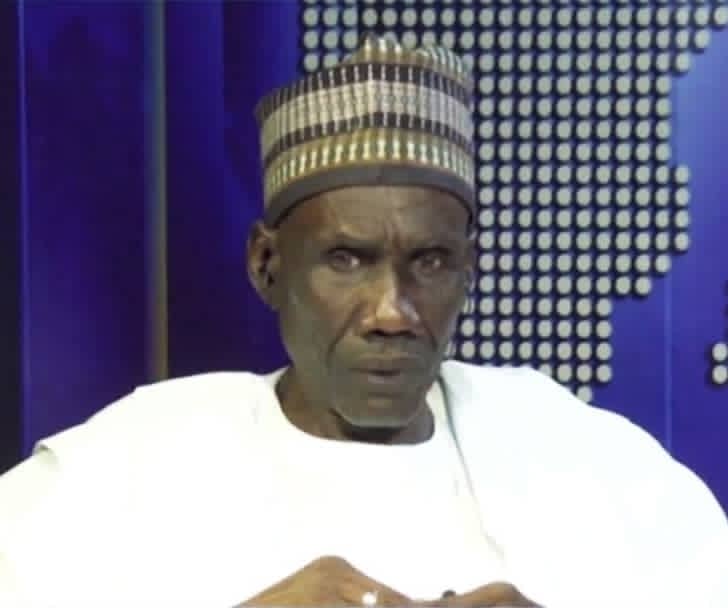

…. Nigeria’s Global Relevance Undeniable, Says Dikwa, Calls for Governance Reset
By:Babagana Bukar Wakil, Maiduguri


A senior academic, Professor Khalifa Ali Dikwa, has called for sweeping electoral and governance reforms in Nigeria, urging the National Assembly of Nigeria to amend key constitutional provisions to deepen democratic legitimacy and citizen participation.
In a series of posts published Monday on the professional platform Ictv24 and addressed to the National Assembly of Nigeria, the Independent National Electoral Commission and the Nigerian Television Authority, Prof. Dikwa argued that Nigeria’s current threshold for electoral victory requires urgent review.
He proposed that a simple majority should reflect between 40 and 50 percent of registered voters, rather than 30 percent, which he described as “abysmal by any standard.” According to him, where no clear winner emerges under a strengthened threshold, the electoral umpire should conduct a re run to ensure broader legitimacy.
The professor also stressed the need to confront voter apathy head on, insisting that citizens must be mobilised and convinced to actively participate in the democratic process.
On youth inclusion, Prof. Dikwa advocated reducing the voting age from 18 to 16 years. He argued that many Nigerians within that age bracket are physically mature and already engaged in civic and political discourse, and should therefore not be excluded from participating in shaping the nation’s leadership.
Beyond electoral matters, the academic called on Nigeria and other African countries to demonstrate humanitarian solidarity by sending medicines and relief materials to flood devastated nations such as Madagascar, Mozambique and Sudan.
He maintained that humanitarian gestures are not necessarily defined by quantity but by the spirit of humanity and civilisation behind them, regardless of domestic challenges.
Prof. Dikwa further urged Nigerian leaders to avoid what he described as an “empirical method of trial and error” in governance. Instead, he recommended the adoption of a hybrid democratic model that blends tested and effective elements from other democracies, adapted to Nigeria’s unique realities.
He emphasised Nigeria’s strategic importance on the African continent, describing the country as a potential role model whose governance should not be weakened by partisan distractions.
Commenting on the recent state visit by President Bola Ahmed Tinubu to Turkey, Prof. Dikwa said the engagement underscored Nigeria’s global relevance and strategic weight, despite prevailing security challenges. He added that no developed nation would ignore Nigeria’s significance in international affairs.
He concluded by cautioning political actors against undermining national interests for personal gains, urging collective responsibility in strengthening governance and democratic institutions.
About The Author
