



By: Abdullahi Inuwa
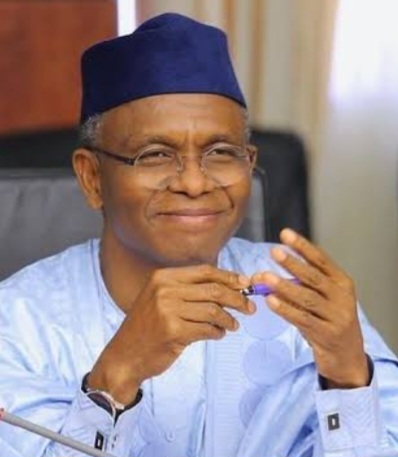
Few figures in Nigeria’s political landscape stir debate quite like Nasir El-Rufai. Admired by supporters for his boldness and criticised by opponents for what they describe as a tough, sometimes intolerant leadership style, El-Rufa’i has never been a politician who blends quietly into the background.


Many Nigerians, including this writer, have long held reservations about his methods — his confrontational rhetoric, his uncompromising posture, and his readiness to take hard decisions that often left political scars. Yet beyond personal opinions about his style lies a more troubling issue: the direction Nigeria’s politics appears to be taking.
In recent years, the nation’s anti-corruption drive has remained a central theme of governance. Agencies such as the Independent Corrupt Practices and Other Related Offences Commission (ICPC) and the Economic and Financial Crimes Commission (EFCC) have repeatedly pledged commitment to transparency and accountability. Their work is crucial in a country where public trust in institutions is fragile.
However, perception matters in politics — sometimes as much as reality. When investigations appear to intensify only after a politician falls out with the ruling establishment, questions inevitably arise. If a public official is untouched while politically aligned, but swiftly scrutinized once estranged, it creates an impression of selective justice. Whether accurate or not, that perception erodes confidence in democratic institutions.
El-Rufa’i is not above scrutiny. No public servant should be. Democracy demands accountability from all who hold power, regardless of party, influence, or ambition. But accountability must be even-handed. It must not seem triggered by shifting political alliances.
The deeper concern is not about one man. It is about precedent. If loyalty to a ruling party becomes an invisible shield against investigation, while dissent invites legal heat, democracy begins to tilt. Political competition turns into political survival. And institutions meant to serve the republic risk being viewed as instruments of partisan contest.
Nigeria’s democracy is still evolving. It has endured military rule, constitutional crises, and intense electoral battles. What sustains it is the belief — however tested — that the rule of law stands above political convenience. Once that belief weakens, cynicism grows. Citizens disengage. Trust diminishes.
Critics of El-Rufa’i argue that his record invites scrutiny and that public office must come with public accountability. That is valid. Yet defenders counter that the timing and pattern of investigations in Nigeria often follow political realignments rather than transparent institutional processes. That concern, too, deserves reflection.
In the end, the question transcends personalities. It touches the soul of governance. Equal justice under the law is not a slogan; it is the bedrock of democracy. If Nigerians begin to believe that justice is conditional — granted to allies, denied to critics — the damage may outlast any individual political career.
El-Rufa’i may be controversial. He may be flawed. But the integrity of Nigeria’s democratic institutions is bigger than any one politician. The country deserves a system where investigations are consistent, institutions are impartial, and accountability is blind to party colours.
Anything less risks turning politics into a game of protection and punishment — and Nigeria can ill afford that path.
About The Author
