


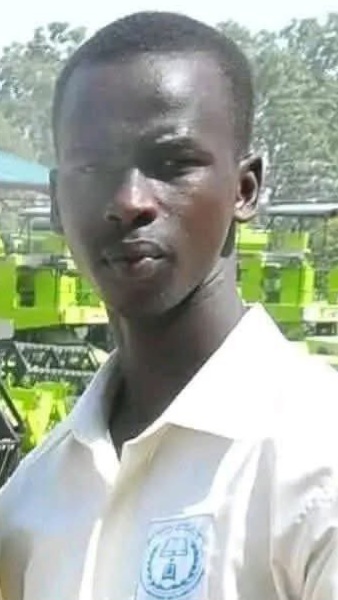

By:Abdullahi Inuwa
On this day in 2017, a quiet corner of Borno State became the stage for one of the most extraordinary acts of courage in Nigeria’s modern history. It did not involve a soldier on a battlefield or a first responder racing toward danger. It involved a schoolboy—an SS1 student—whose alertness and bravery rewrote the fate of hundreds in a single, selfless moment.


His name was Yakubu Muhammad Fannami.
According to accounts that have endured in community memory, Yakubu noticed something was wrong. Amid the ordinary movement of people—neighbours, traders, passers-by—he spotted unusual behaviour: a man advancing toward a crowd with intent that did not sit right. In a region already bruised by years of insurgency, such instincts were not abstract fears; they were hard-earned lessons of survival. Yakubu’s observation was sharp, and his conclusion swift. He realized the danger before many others could.
What happened next has since been spoken of in hushed reverence. With no time to alert authorities or disperse the gathering, Yakubu made a split-second decision that would define his legacy. He charged toward the suspected suicide bomber and grabbed him tightly, using his own body as a barrier between terror and the unsuspecting crowd.
Moments later, the explosion occurred.
Yakubu perished alongside the attacker. But because of his action, the blast did not reach its intended target. Hundreds of lives—men, women, children—were spared. Families were saved from unspeakable grief. A community was preserved from devastation. In one brave act, a teenager altered the outcome of what could have been a mass tragedy.
In a conflict often measured by numbers—casualties, attacks, displacements—Yakubu’s story stands apart. It is not a statistic; it is a testament. He was not armed with anything other than courage and conscience. He did not act for recognition or reward. He acted because, in that critical moment, he chose others over himself.
Those who knew Yakubu remember him as an ordinary student with ordinary dreams. He attended school, planned for the future, and lived the everyday life of a young Nigerian navigating uncertainty with hope. That ordinariness is what makes his heroism so profound. He did not wake up that day expecting to be a hero. He simply refused to look away when it mattered most.
Across Borno State, a land that has borne the heavy cost of insurgency, stories like Yakubu’s offer a different narrative—one of resilience, vigilance, and moral courage. They remind us that even in the darkest seasons, light can come from the most unexpected places. A student. A split second. A choice.
In the years since 2017, many have asked what society owes such a sacrifice. Monuments are built for generals and politicians; holidays are declared for historic victories. Yet the heroism of a schoolboy who saved hundreds risks fading into oral memory if not deliberately preserved. Yakubu Muhammad Fannami deserves more than remembrance in passing conversations. He deserves to be immortalized.
Immortalization does not only mean statues or plaques—though those matter. It also means teaching his story in classrooms, naming scholarships in his honour, and holding annual remembrances that speak his name aloud. It means ensuring that future generations understand that bravery is not measured by age or rank, but by the willingness to act for the common good.
Yakubu’s sacrifice also places a mirror before the nation. It asks difficult but necessary questions: How do we protect our communities better? How do we support young people growing up amid insecurity? And how do we honour those who give everything so others may live?
On this day, nine years later, the grief of his loss remains, but so does the power of his example. His act did not end violence in the region, but it interrupted it—decisively, courageously. It saved lives. It changed destinies. And it carved his name into Nigeria’s moral history.
As candles are lit and prayers whispered, one truth stands firm: Yakubu Muhammad Fannami did not die in vain. He stood where danger walked freely and said, with action rather than words, “No further.”
May his soul continue to rest in peace.
And may his courage continue to live—forever.
About The Author
