


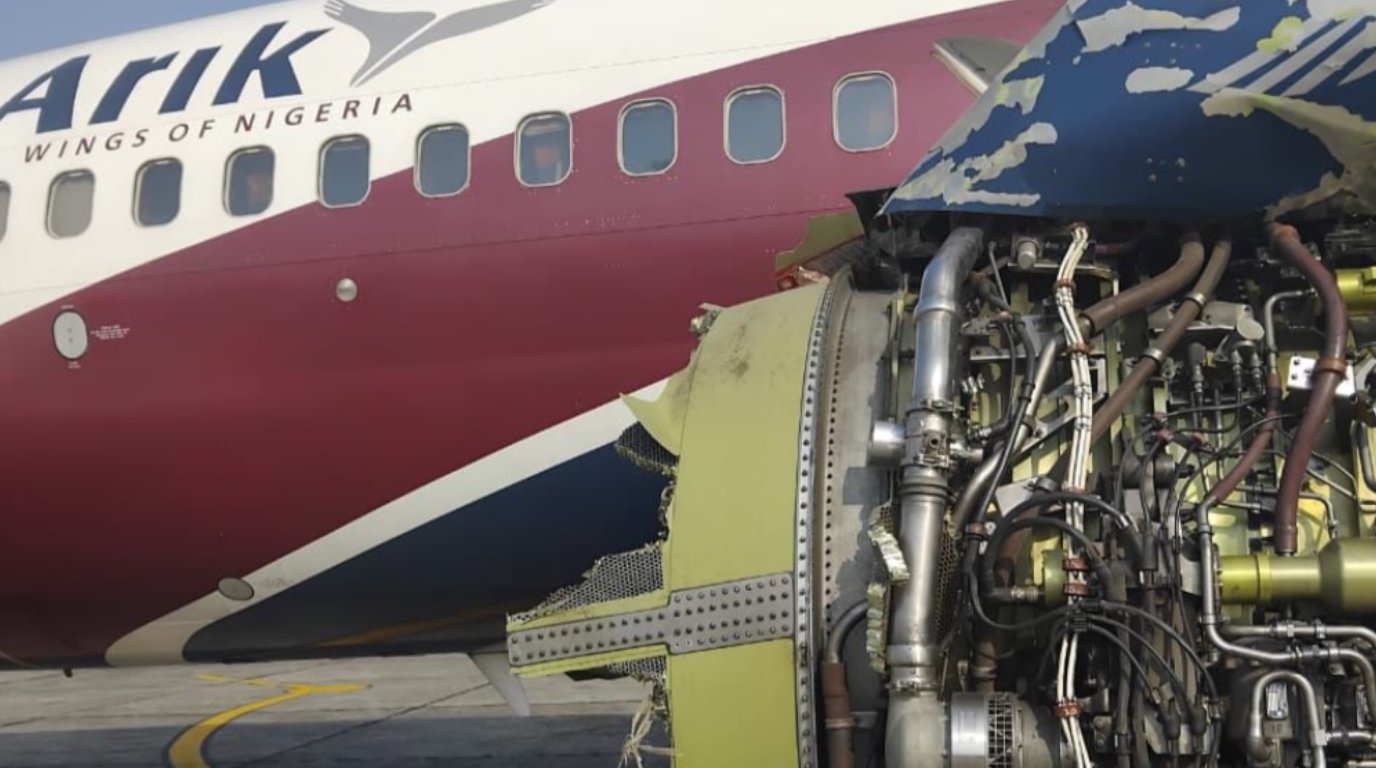

About 80 passengers escaped what could have been a tragic aviation disaster on February 11, after the pilot and cabin crew of an aircraft operated by Arik Air executed a swift emergency diversion following an engine malfunction mid-air.
The aircraft, a Boeing 737-700 with registration number 5N-MJF, was operating Flight W3-740 from Lagos to Port Harcourt when the incident occurred.


According to the airline, the crew “heard a loud bang from the left engine” while the aircraft was descending into Port Harcourt International Airport.
The captain immediately initiated emergency procedures and diverted the aircraft to Benin Airport as a precautionary measure.
A passenger who spoke about the ordeal described how the routine flight suddenly turned into a moment of sheer terror.
“The trip began like any other — smooth climb, calm cabin, nothing unusual,” she said. “We were ascending steadily, and for a while, everything felt normal. Until it happened.”
She recounted hearing a sudden loud bang before the aircraft began vibrating intensely.
“In seconds, the plane started shaking. I looked out the window and froze. Panic erupted everywhere. People were shouting prayers.
Fear was heavy in the cabin,” she said.
Despite the shock inside the aircraft, aviation sources say the cockpit remained composed.
The pilot reportedly followed standard engine failure protocols, stabilised the aircraft, communicated with air traffic control, and opted for the nearest suitable airport — a critical decision that aviation experts say often determines survival in such emergencies.
The cabin crew also swung into action, calming passengers, issuing safety instructions, and ensuring seat belts were secured while preparing the cabin for a possible emergency landing.
Industry analysts note that modern commercial aircraft like the Boeing 737 are designed to safely operate on one engine if necessary, provided proper procedures are followed — a factor that likely contributed to the safe outcome.
The aircraft landed safely in Benin without further incident, and all passengers and crew disembarked unharmed, averting what many onboard feared could be a catastrophe.
Arik Air confirmed the diversion and assured the public that passenger safety remains its top priority. The airline stated that the aircraft would undergo thorough technical checks in line with aviation safety regulations.
Aviation authorities are expected to review the incident as part of routine safety oversight.
For the passengers of Flight W3-740, February 11 will not be forgotten easily — a day that began in routine calm but ended as a testament to training, professionalism, and the split-second decisions that saved nearly 80 lives above Nigerian skies.
About The Author
