


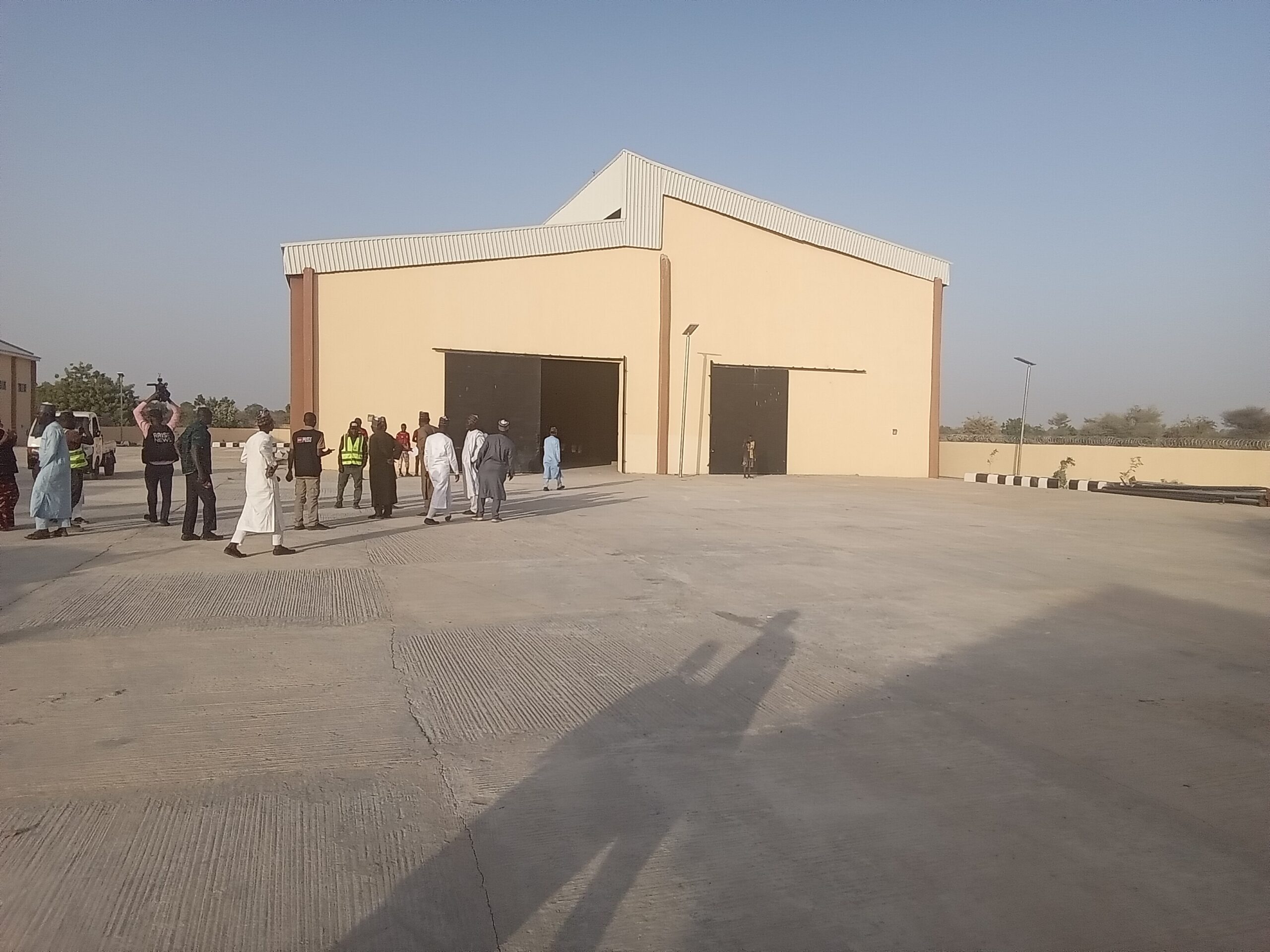

Machina is no ordinary town. Steeped in history and strategically positioned as a border community, the ancient settlement has long served as a hub of agriculture and commerce in Yobe State—much like Nusariwa before it. Today, Machina is writing a new chapter, one defined by cranes, concrete, and confidence in the future.
Driven by a firm belief that economic growth begins with the right infrastructure, Mai Mala Buni, the Executive Governor of Yobe State, approved the construction of a modern market in Machina to give traders, farmers, and entrepreneurs a secure and well-organised environment to do business.


Construction began in August last year. Barely four months on, the pace and scale of work already tell a powerful story: Machina is on the fast track to becoming a commercial powerhouse.
Speaking during an inspection tour, state officials noted that the market project is part of a broader economic strategy that has seen Yobe develop ultra-modern markets across the state. Gashua, Potiskum, Damaturu, Nguru and Gaidam now boast some of the most contemporary market facilities in northern Nigeria—so impressive that a delegation from another northern state recently visited Yobe to understudy the projects.
For observers, that visit spoke volumes.
“When others come to learn from you, it shows leadership by example,” one official remarked, describing the Governor’s approach as a model for economic development in the region.
As peace steadily returns through the efforts of security agencies, the Buni administration is moving quickly to create conditions for recovery—places where people can trade freely, farm productively, and grow livelihoods. Agriculture, already a strength of Yobe State, sits at the heart of this vision.
Value Beyond Trade: Sesame as a Game Changer
Addressing journalists, Ahmad Bouba, Honourable Commissioner for Housing, explained that the Machina market mirrors the modern facility already completed in Nusariwa, from design to components.
But beyond stalls and shops, another strategic investment is taking shape: sesame seed processing plants.
Machina, Nguru, Potiskum and Damaturu are among the towns hosting these facilities, aimed at adding value to one of Yobe’s most prized crops. Exporters consistently rank Yobe’s sesame—especially that grown in Machina—among the finest and sweetest in Nigeria.
Rather than exporting raw produce, the Governor’s plan is clear: process, package, and brand locally before distribution or export. The result? More jobs, higher earnings, and a stronger state economy.
With modern markets rising, processing hubs taking shape, and agriculture firmly in focus, optimism is high that—by the grace of Almighty Allah—Yobe State’s economy is not just recovering, but repositioning itself as a commercial leader in the North.
Machina, once known mainly for its history and border trade, is now fast becoming a symbol of Yobe’s economic renaissance.
About The Author
