



By: Abdullahi Inuwa
Nigeria’s electoral integrity is once again under intense scrutiny as fresh allegations, if proven true, threaten to shake the very foundation of the country’s democratic process.


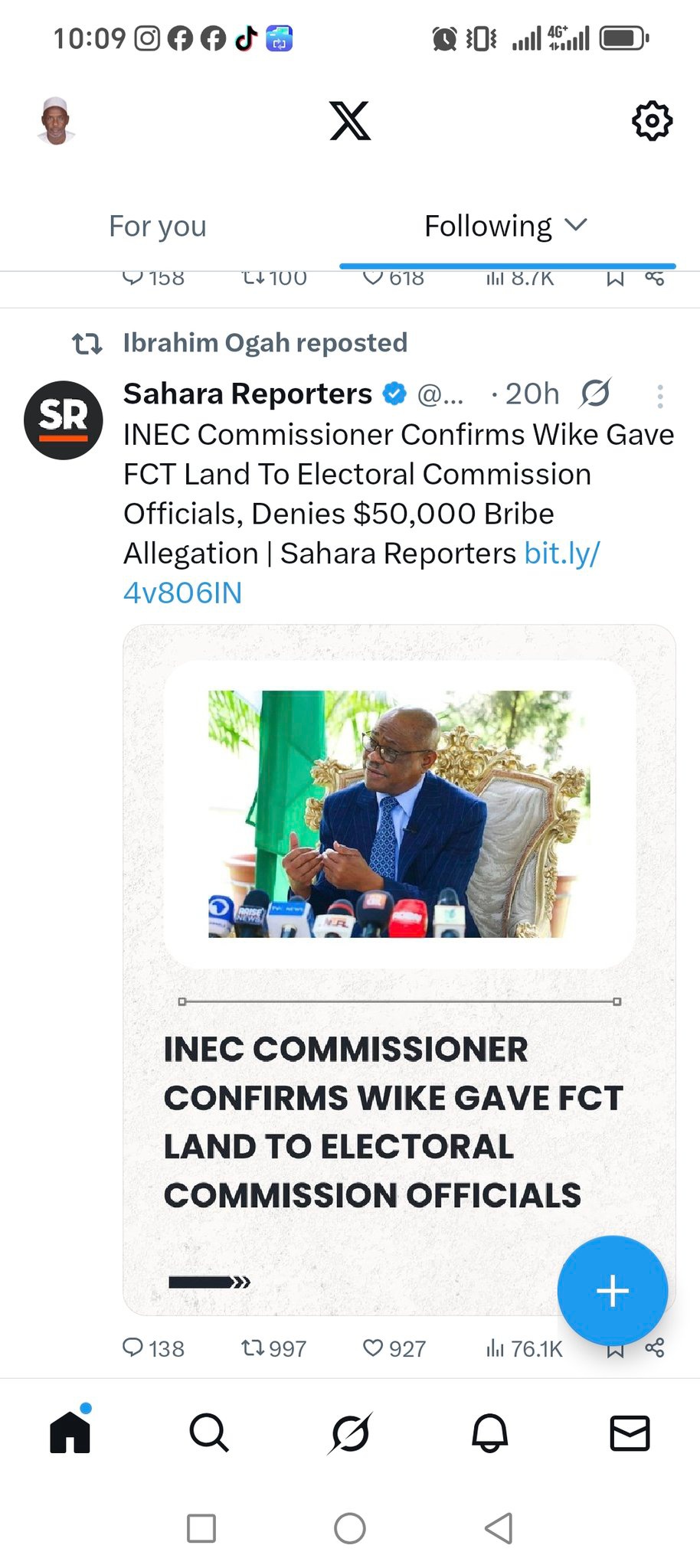
At the centre of the unfolding controversy are claims that no fewer than 29 senior officials of the Independent National Electoral Commission (INEC) were allocated plots of land in Abuja by the Minister of the Federal Capital Territory, Nyesom Wike. Even more troubling is the assertion that Mohammed Haruna, a National Commissioner who also oversees elections in the FCT, has confirmed the allocations.
If these claims hold water, analysts warn, the implications could be far-reaching and deeply damaging.
In a nation where electoral credibility is already a fiercely contested issue, such a development would amount to what many observers describe as a “self-inflicted wound” by the electoral umpire.
The perception of neutrality—arguably INEC’s most valuable asset—would be severely compromised, casting a long shadow over its operations ahead of future elections.
Political analysts argue that the mere appearance of a transactional relationship between a key electoral body and a powerful political office holder is enough to erode public confidence, regardless of the legality or procedural justification of such allocations.
“The danger here is not just legality; it is perception,” a governance expert in Abuja noted. “Once Nigerians begin to suspect that electoral officials may be beneficiaries of political patronage, the moral authority of the institution begins to crumble.”
The stakes are particularly high given Mohammed Haruna’s dual role.
As the official responsible for overseeing elections in the Federal Capital Territory, any confirmed benefit from the FCT administration raises uncomfortable questions about conflict of interest and institutional independence.
For many Nigerians, the issue strikes at the heart of trust. Elections are not merely about ballots and results—they are about belief in the process. Without that belief, even the most transparent exercise risks rejection.
Observers warn that such allegations, if left unaddressed, could embolden critics and political actors to cast sweeping aspersions on INEC’s entire structure.
This, in turn, may fuel post-election disputes, heighten political tensions, and weaken democratic stability.
Beyond Nigeria’s borders, the potential fallout could be equally significant.
International observers, foreign governments, and development partners closely monitor the credibility of Nigeria’s elections.
Any dent in the perceived independence of INEC could undermine confidence in the country’s democratic institutions and processes.
“It sends the wrong signal globally,” a diplomatic source remarked. “Nigeria is a key player in Africa, and its electoral standards matter beyond its borders.”
Yet, some legal minds caution against premature conclusions, urging a careful examination of the facts.
They argue that land allocations, if conducted transparently and within the law, may not necessarily constitute wrongdoing.
However, they concede that the optics of the situation remain deeply problematic.
This unfolding situation underscores a recurring challenge in Nigeria’s governance landscape—the thin line between legality and legitimacy.
While actions may pass legal thresholds, they must also withstand the test of public perception and ethical scrutiny.
For INEC, the moment calls for clarity, transparency, and swift communication. Silence or ambiguity could further deepen suspicion and erode what remains of public trust.
As the debate intensifies, one conclusion appears unavoidable: if the allegations are true, this is an avoidable tragedy—one that risks inflicting lasting damage on Nigeria’s electoral credibility at a time when trust is already in short supply.
The coming days will determine whether this storm is contained or allowed to spiral into yet another crisis of confidence in Nigeria’s democratic journey.
About The Author
