


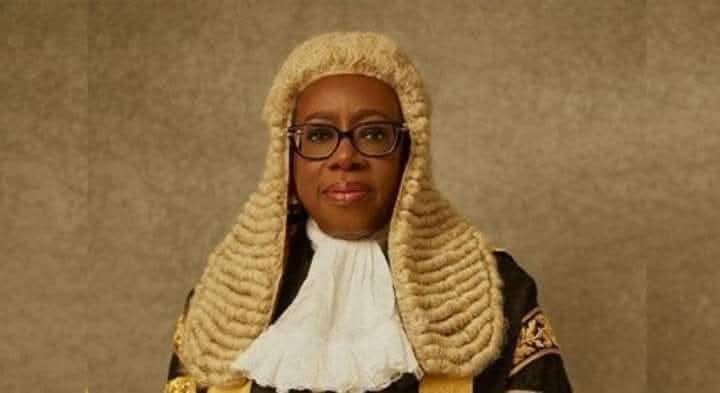

The Supreme Court has delivered a historic verdict affirming that the right to wear the hijab and observe Islamic prayers on campus is protected under Nigeria’s Constitution, bringing to a close a 14-year legal battle involving Rivers State University.
In a unanimous decision delivered on February 10, 2026, the apex court dismissed the university’s appeal, upholding earlier judgments that recognised Muslim students’ right to worship freely and be provided with a suitable place of worship within the campus.


The case, which began in 2012, was instituted by Umaru Wazuru and 98 other Muslim students who alleged that university authorities barred them from conducting prayers and establishing a mosque, despite the presence of churches operating within the institution.
The legal contest first found resolution in 2013 when the Federal High Court in Port Harcourt ruled in favour of the students. The court held that denying Muslim students a place of worship violated their constitutional right to freedom of religion as guaranteed by Nigerian law.
Unwilling to accept the verdict, RSU proceeded to the Court of Appeal. In 2017, the appellate court dismissed the university’s appeal and affirmed the High Court’s judgment, reinforcing the principle that no institution can suppress lawful religious expression.
Still, the matter advanced to the Supreme Court, marking one of the most closely watched campus rights cases in recent years.
Apex Court’s Final Word
In its final pronouncement, the Supreme Court made it clear: Muslim students have the constitutional right to practice their religion freely, including observing prayers and having access to a designated worship space.
Legal analysts describe the ruling as a significant affirmation of Section 38 of the 1999 Constitution, which guarantees freedom of thought, conscience, and religion.
The decision is final and binding, leaving no further room for appeal. Rivers State University is now expected to comply fully with the judgment by allocating appropriate space for Muslim worship on campus.
Observers say the ruling sends a powerful message to educational institutions nationwide about inclusivity, equality, and constitutional compliance.
Beyond the immediate parties involved, the judgment is being hailed as a milestone for religious freedom in Nigeria’s tertiary institutions. It underscores the judiciary’s role in safeguarding fundamental rights, even in sensitive and long-running disputes.
For the students who initiated the case over a decade ago, the verdict marks the culmination of persistence and faith in the legal process.
And for Nigeria’s democracy, it stands as a reminder: constitutional rights are not privileges — they are guarantees.
Source:@ellwahabb
About The Author
