



Countries across the Gulf region are confronting a growing strategic dilemma as tensions in the Middle East deepen, raising concerns about security, regional alliances, and internal political stability.
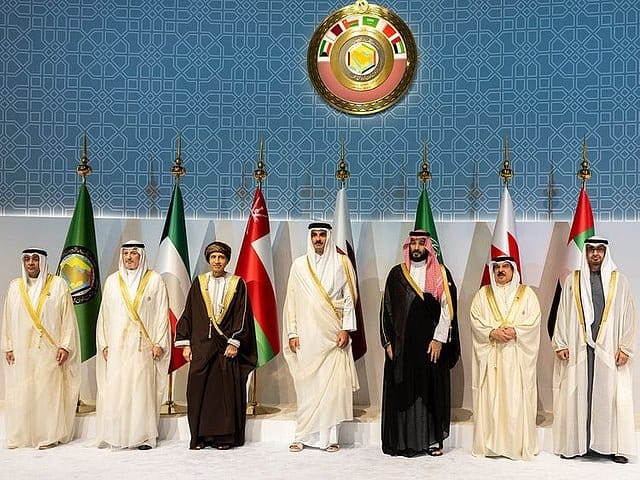
Analysts say the governments of key Gulf states — including Saudi Arabia, United Arab Emirates, Qatar and Bahrain — are increasingly caught between geopolitical pressures and domestic sensitivities as the standoff involving Iran and Israel intensifies.


Observers note that one of the most pressing concerns for Gulf leaders is uncertainty surrounding their long-standing security reliance on the United States, which for decades has maintained a strong military presence in the region and served as a key security guarantor for Gulf monarchies.
However, shifting global priorities and evolving diplomatic dynamics have raised questions in some policy circles about whether Washington would intervene decisively in future regional conflicts.
At the same time, analysts warn that direct military confrontation with Iran would carry significant risks for Gulf governments.
Beyond the military consequences, such a move could inflame public opinion across the region, where sympathy for the Palestinian cause and opposition to Israeli policies remain strong.
Many political commentators argue that domestic backlash could emerge if Gulf states were perceived as participating in actions aligned with Israel against Iran, particularly at a time when tensions surrounding the Palestinian issue remain high.
In countries with diverse political and sectarian dynamics, experts say internal divisions could deepen, potentially triggering protests or unrest if regional conflict escalates.
As a result, Gulf leaders are believed to be carefully balancing diplomatic engagement, military preparedness, and regional mediation efforts in order to avoid being drawn directly into a wider confrontation.
The evolving situation underscores the fragile geopolitical environment in the Middle East, where alliances, public sentiment, and security interests continue to intersect in complex ways.
For now, analysts say Gulf states appear to be pursuing a cautious approach — seeking to maintain stability at home while navigating the increasingly volatile rivalry shaping the region’s future.
About The Author
