


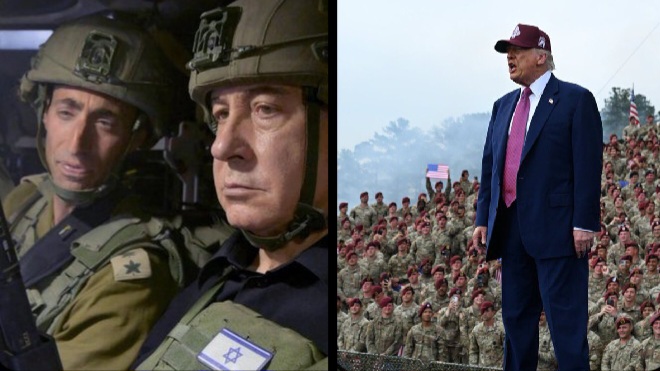

An Israeli official’s terse response to remarks by Donald Trump about the possibility of deploying U.S. ground forces into Iran has ignited fresh global anxiety.
“The matter is under consideration.”
Just four words — but enough to rattle diplomatic circles.
The conflict had been framed as a swift, air-power campaign: precision strikes, strategic bombers, naval firepower and decisive blows from afar. Supporters portrayed it as calculated and contained. Now, talk of “boots on the ground” signals something far more complex — and potentially far more dangerous.


Military analysts warn that Iran’s geography, population size and entrenched security structures — including the powerful Islamic Revolutionary Guard Corps — make any ground operation vastly different from past U.S. interventions in the Middle East.
Comparisons to Iraq and Libya have resurfaced in debate, with critics cautioning against escalation into a protracted regional conflict.
The suggestion of ground deployment also raises strategic questions about objectives, duration and exit plans. For Washington and Israel, the stakes are enormous — militarily, politically and economically.
As rhetoric intensifies, one reality becomes clear: when air campaigns give way to talk of troops, the calculus of war changes — and so does the cost.
About The Author
