


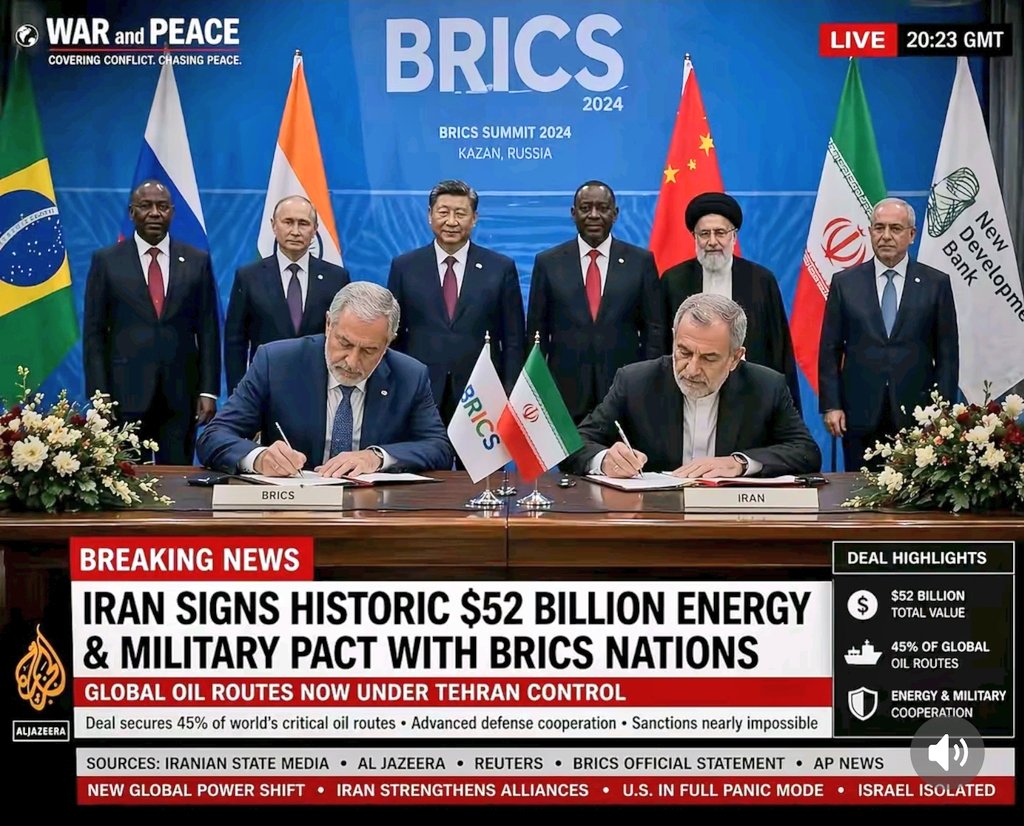

A sensational claim that Iran has sealed a $52 billion energy and military pact with BRICS nations—allegedly giving Tehran control over nearly half of the world’s key oil routes—has ignited global buzz, but facts remain murky.
The explosive narrative, circulating widely online, suggests a dramatic geopolitical shift that would weaken Western influence and make sanctions “virtually impossible.”


However, no credible mainstream reports or verified official statements currently confirm such a sweeping agreement.
What is clear is that Iran’s influence over strategic corridors—especially the Strait of Hormuz—has grown amid recent tensions.
The vital waterway handles roughly 20% of global oil supply, and disruptions there have already sent shockwaves through energy markets.
Analysts also note that Iran has been deepening economic ties with BRICS countries, exploring alternatives to the U.S. dollar in oil trade and building new financial systems to bypass sanctions.
Still, experts warn that claims of “45% control of global oil routes” and a sweeping $52 billion military-energy pact appear exaggerated or unverified, with some online commentators already flagging the story as misleading.
For now, the reality points to a shifting global energy landscape—but not the overnight power takeover some viral posts suggest.
As tensions rise and alliances evolve, the real story may be less about a single deal—and more about a slow, strategic reshaping of global power.
About The Author
