


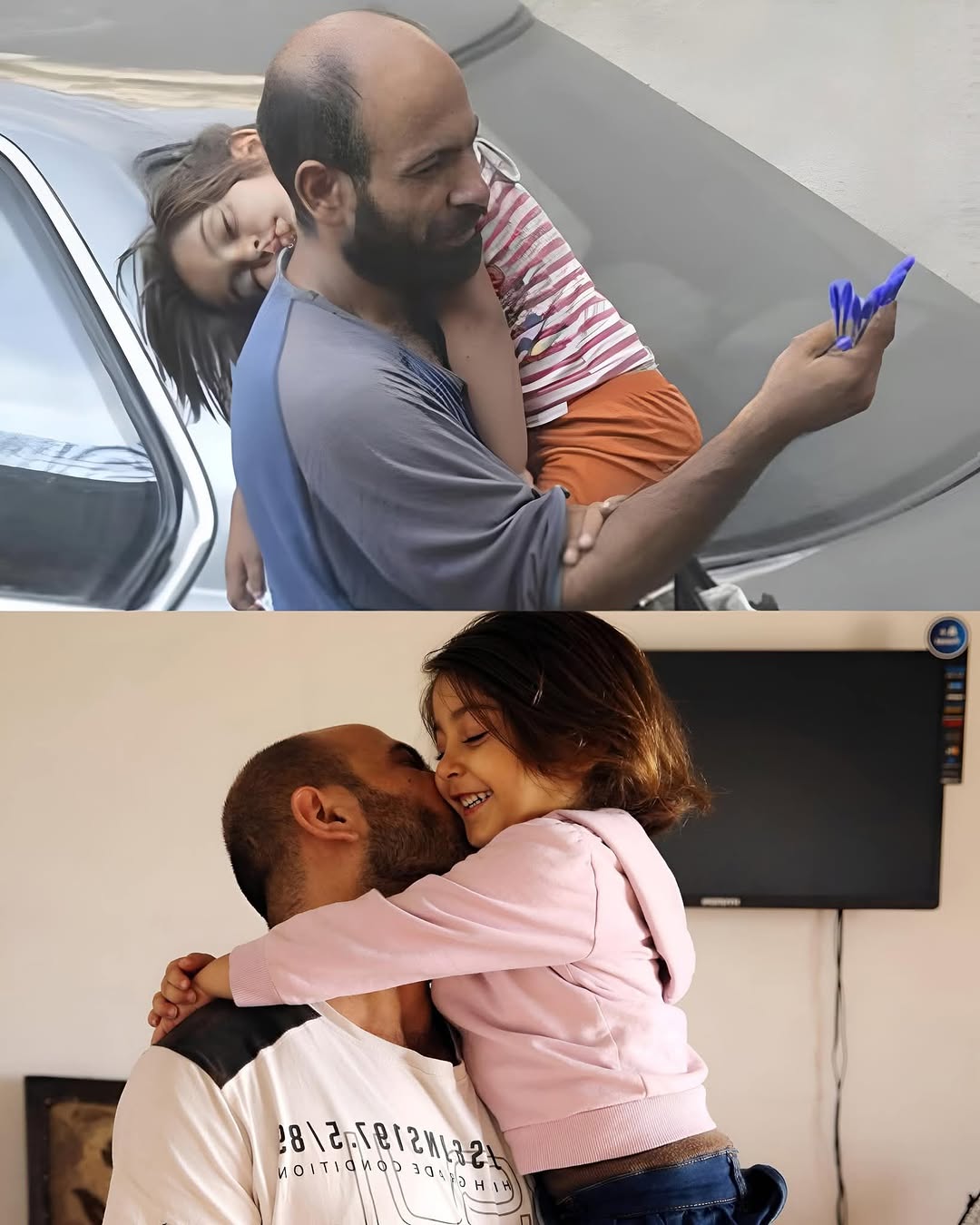

BEIRUT, LEBANON — In 2015, at the height of the refugee crisis, a simple yet heartbreaking image captured the world’s attention: a Syrian father selling pens on the streets of Beirut, his young daughter asleep on his shoulder.
The man, later identified as Abdul Halim Attar, was trying to earn a few dollars under harsh conditions to secure a dignified life for his child.


The touching photograph, shared widely across social media, quickly became a global symbol of resilience, fatherhood, and the silent struggles of displaced families.
What happened next stunned even seasoned humanitarian observers.
An Icelandic programmer, moved by the image, launched a crowdfunding campaign with a modest goal of $5,000. But in a powerful show of global solidarity, donations poured in from around the world — raising over $190,000 within a short time.
His family moved into better housing. His children returned to school. Determined to pay forward the kindness, he invested in small business ventures that created job opportunities for fellow refugees in Lebanon. He also sent assistance to relatives still struggling in war-torn Syria.
What began as a single photograph became a turning point — not just for one family, but as a reminder of the power of compassion amplified by technology.
Human rights advocates say the story remains one of the most inspiring examples of how digital connectivity can mobilize real-world impact, proving that behind every viral image lies a human story waiting to be changed.
From a street corner in Beirut to headlines across continents, one father’s quiet determination — and the world’s response — turned hardship into hope.
About The Author
