


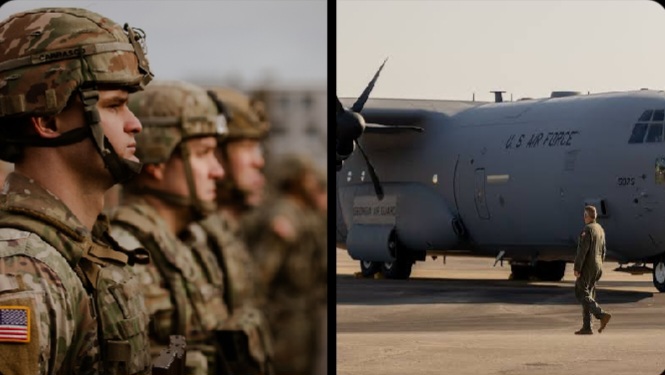

The first wave of United States military personnel has arrived in Nigeria, launching a new security deployment that will see roughly 200 American intelligence analysts, advisers, and trainers working alongside Nigerian forces in targeted counterterrorism operations.
Officials confirmed Friday that the deployment is focused on intelligence support, operational advisory roles, and specialised training designed to strengthen Nigeria’s fight against insurgent and extremist threats.


Part of the mission, according to officials, includes bolstering efforts to protect vulnerable communities, including Christians who have been affected by violence in parts of the country.
Security sources say the American contingent will not engage in direct combat but will instead provide strategic planning assistance, intelligence-sharing capabilities, and counterterrorism expertise to Nigerian military and security agencies.
The arrival marks a significant step in security cooperation between Nigeria and the United States, coming at a time when Nigerian forces continue operations against insurgent groups and armed factions across various regions.
Military analysts note that such deployments typically focus on enhancing local capacity — including surveillance techniques, data analysis, special operations coordination, and crisis response planning.
The partnership is expected to deepen intelligence collaboration and improve precision in targeted operations.
Officials emphasized that the deployment was carried out in coordination with Nigerian authorities and is structured within existing bilateral security agreements.
The phased arrival of personnel is expected to continue in the coming weeks until the full complement of about 200 specialists is in place.
Security experts say intelligence-led counterterrorism efforts are increasingly vital in addressing asymmetric threats, particularly where armed groups operate in dispersed networks.
While details about operational locations remain undisclosed for security reasons, authorities say the mission underscores a shared commitment to regional stability and civilian protection.
The development has drawn attention both domestically and internationally, as Nigeria remains a key strategic partner in West Africa’s broader fight against extremism.
As the deployment unfolds, observers say its effectiveness will hinge on coordination, intelligence integration, and sustained support — factors that could shape the next phase of Nigeria’s counterterrorism strategy.
About The Author
