


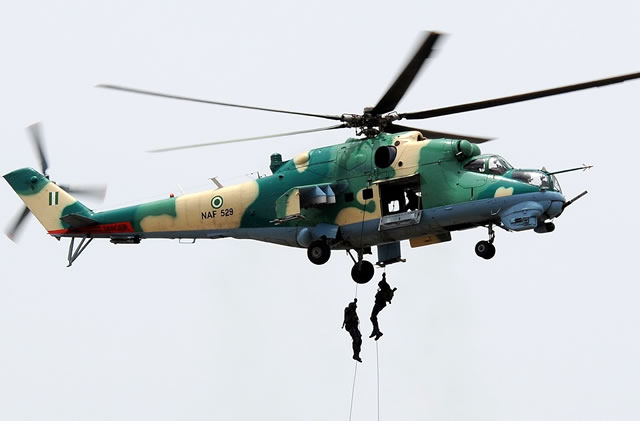

In a decisive show of air power, the Nigerian Air Force at first light on February 1 delivered a precision airstrike against bandit camps deep inside the Shawu–Mununu forest axis of Faskari Local Government Area, Katsina State.
Security sources confirmed that the dawn operation followed sustained Intelligence, Surveillance and Reconnaissance (ISR) that tracked hostile movements and verified the camps’ links to recent attacks along the Bakori–Guga corridor. Once confirmation was secured, NAF aircrews moved swiftly, striking identified targets with accuracy designed to neutralise threats while limiting collateral impact.


Residents around the affected axis reported hearing aircraft activity at daybreak, after which multiple bandit positions were hit. Several criminals were neutralised, effectively disrupting their operational hubs and degrading their capacity to launch further raids on nearby communities.
The strike underscores the Air Force’s evolving doctrine in the North-West: intelligence-led, time-sensitive, and tightly coordinated with supporting forces on the ground. By denying armed groups the sanctuary of forest hideouts, the operation sends a clear signal that safe havens will no longer be tolerated.
Military analysts note that the Shawu–Mununu forest belt has long served as a transit and regrouping zone for bandit elements operating across parts of southern Katsina. The February 1 mission, they say, represents sustained pressure rather than a one-off response—an approach aimed at breaking logistics chains and morale.
Local leaders welcomed the intervention, describing it as a morale boost for communities that have endured repeated attacks. “When criminals realise they can be found and struck even in remote forests, it restores confidence,” a community source said.
Commendations have poured in for the professionalism of the NAF aircrews and the seamless coordination with other security assets that made the operation possible. As air and ground forces maintain the momentum, authorities reaffirmed their commitment to protect lives and livelihoods, and to keep criminal networks on the run.
The message from the skies over Faskari is unmistakable: vigilance continues, pressure remains unrelenting, and communities come first.
About The Author
