


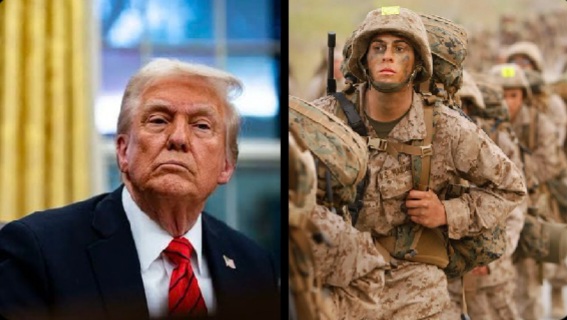

Tensions in the Middle East have escalated sharply as security experts warn that American troops would be in “great danger” in the event of a full-scale conflict with Iran, according to reports by Reuters.
Analysts say any U.S. military operation targeting Iran could trigger immediate and sustained retaliation, potentially spiraling into a prolonged regional confrontation with unpredictable consequences.


Defense specialists note that Iran possesses a formidable arsenal of ballistic and cruise missiles capable of reaching U.S. installations across the region. American troops stationed at bases in the Gulf and surrounding areas could face retaliatory strikes within hours of any offensive action.
According to Reuters, one U.S. official acknowledged that Washington “fully expects Iran to retaliate,” potentially setting off back-and-forth exchanges over an extended period.
Military observers warn that such tit-for-tat strikes could endanger thousands of service members and draw neighboring countries into the conflict.
Political Fallout in Washington
The unfolding debate has also taken a political turn. Critics argue that a military confrontation could place young American service members in harm’s way for broader geopolitical objectives tied to regional alliances, including support for Israel.
Supporters of a tougher stance maintain that deterrence remains critical to preventing further instability, while opponents caution that escalation could ignite a wider war across the Middle East.
Former President Donald Trump has previously taken a hard line against Iran, though analysts say any decision to launch a major operation would carry enormous military and diplomatic risks for the United States.
Missile Threat and Regional Domino Effect
Experts emphasize that Iran’s missile capabilities, combined with allied armed groups across the region, could amplify the scale of retaliation. Strategic chokepoints such as the Strait of Hormuz — a vital artery for global oil shipments — could also become flashpoints in the event of sustained hostilities.
Security analysts caution that even limited strikes might rapidly evolve into a regional conflict involving multiple actors, disrupting global energy markets and destabilizing already fragile states.
As tensions simmer, diplomatic channels remain under intense scrutiny. Analysts say de-escalation remains possible, but the margin for error is thin.
For U.S. forces deployed abroad, the stakes are stark. Any military engagement with Iran would not be a short, isolated clash, experts warn — but a confrontation likely marked by waves of reprisals, missile exchanges, and mounting regional pressure.
With global attention fixed on Washington and Tehran, the question now is whether deterrence will hold — or whether the region stands on the brink of another prolonged and dangerous conflict.
About The Author
