



By: Abdullahi Inuwa
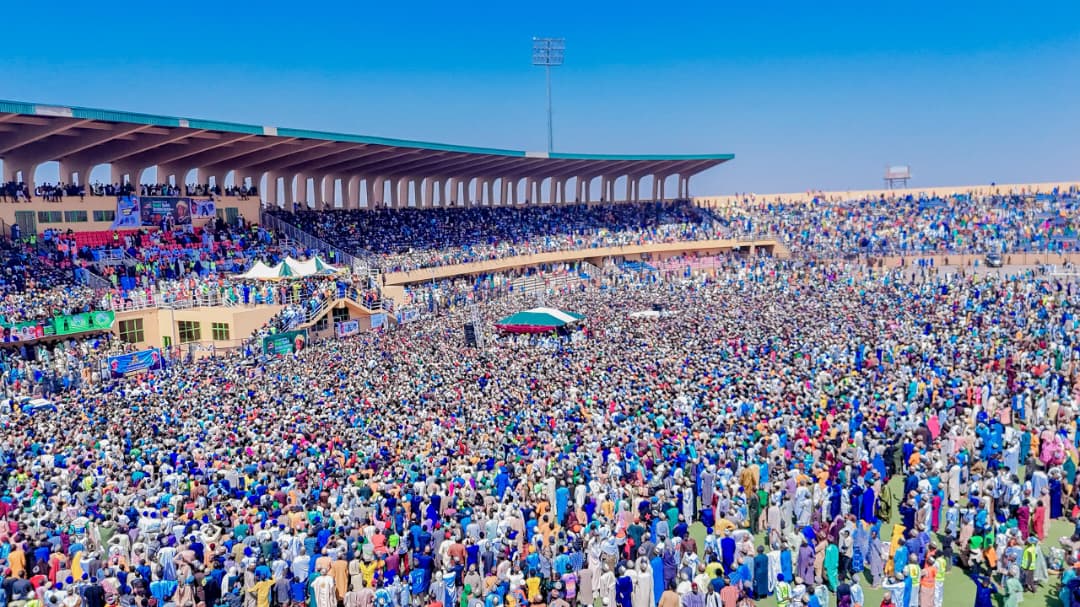
The 126th Maulud of Sheikh Ibrahim Niyass Al-Kawlahy, marking the 40th edition of the annual Nigerian commemoration, has been etched into Katsina State’s history as far more than a grand religious gathering. Beyond its spiritual depth and international appeal, the event stood out as a shining example of how meticulous planning, coordinated security and smart traffic management can turn a potentially chaotic situation into an orderly success.


Held on Saturday, January 17, the Maulud transformed Katsina into a focal point of national and regional attention. Pilgrims, scholars, clerics and visitors poured in from across Nigeria and West Africa, reaffirming the gathering’s status as a major religious and cultural convergence within the Tijaniyya movement and the wider Muslim Ummah.
For Katsina State, a historic centre of Islamic scholarship and a strategic gateway linking Nigeria to the Sahel, hosting such a massive event came with enormous logistical demands. Its proximity to the Niger Republic and its long-standing role in regional commerce and learning amplified both the prestige and the pressure that accompanied the Maulud.
Days to the event, the volume of arrivals swelled dramatically. Long-distance buses, minibuses, private cars, motorcycles and commercial transport convoys streamed into the state from all directions. Pilgrims also crossed borders from Senegal, Mali, Niger Republic, Chad and Ghana, placing exceptional strain on highways and urban roads.
Key routes connecting Katsina to neighbouring states witnessed traffic volumes rarely seen before, with convoys stretching for kilometres. Inside the metropolis, the situation was even more intense. Roads leading to Muhammadu Dikko Stadium, the main venue, were filled with vehicles and pedestrians, while surrounding areas absorbed the overflow.
The stadium itself overflowed with worshippers. Nearby roads, mosques, parks and schools quickly became auxiliary prayer and assembly points. Informal trading boomed as vendors and transport operators responded to the surge in human activity, adding another layer of complexity to movement and control.
By all accounts, the mix of massive crowds and dense traffic could have triggered gridlock, accidents or security concerns. Instead, the outcome was the opposite — a calm, controlled environment widely praised by residents and visitors alike. Observers described the operation as a textbook example of foresight and cooperation.
Central to the success was a shared operational focus among security and traffic agencies: safeguarding lives and property. This guiding principle shaped every deployment and on-the-spot decision, replacing fragmented responses with a unified, all-hands-on-deck strategy that blended traffic regulation, crowd control, intelligence and emergency readiness.
Anticipating heavy congestion, the Federal Road Safety Corps (FRSC), Katsina State Command, rolled out a detailed traffic plan aimed at maintaining order and smooth flow. Officers were stationed at highways, intersections and pedestrian crossings. Diversion routes were activated to ease pressure around the stadium and city centre, while selected roads temporarily operated one-way to improve circulation. Tow trucks were positioned strategically to promptly clear broken-down vehicles and prevent bottlenecks.
Crowd management received equal attention. With tens of thousands gathered in limited spaces, security personnel worked closely with organisers to control access points and guide pedestrian movement, reducing the risk of overcrowding or stampede. The overall security arrangement was marked by coordination and a shared sense of purpose across agencies.
The results were clear: no major traffic incidents, largely free-flowing roads, safe movement of worshippers and a peaceful atmosphere throughout the event. For many, it was proof that such outcomes are not accidental but the reward of professionalism, discipline and planning.
Beyond Katsina, the success of the 126th Maulud offers important lessons for managing large religious and cultural events nationwide. It highlights the value of early risk assessment, inter-agency collaboration, community cooperation and continuous training for security and traffic personnel.
As pilgrims began their journeys home, the FRSC reiterated safety advisories, urging motorists to avoid speeding, ensure vehicle fitness, use seat belts, limit night travel and take rest breaks to prevent fatigue. The Corps also maintained highway monitoring during the post-event movement to sustain order.
In the final analysis, the 126th Maulud of Sheikh Ibrahim Niyass Al-Kawlahy (RTA) will be remembered not only for its spiritual significance, but as a landmark achievement in organisation and public safety. Katsina State has demonstrated that when faith, governance and professionalism work in unison, even the largest gatherings can unfold smoothly — setting a standard worthy of emulation across the country.
Source:Corps Commander Maxwell Kaltungo Lede
Sector Commander Federal Road Safety Corps Katsina Command.
About The Author
